
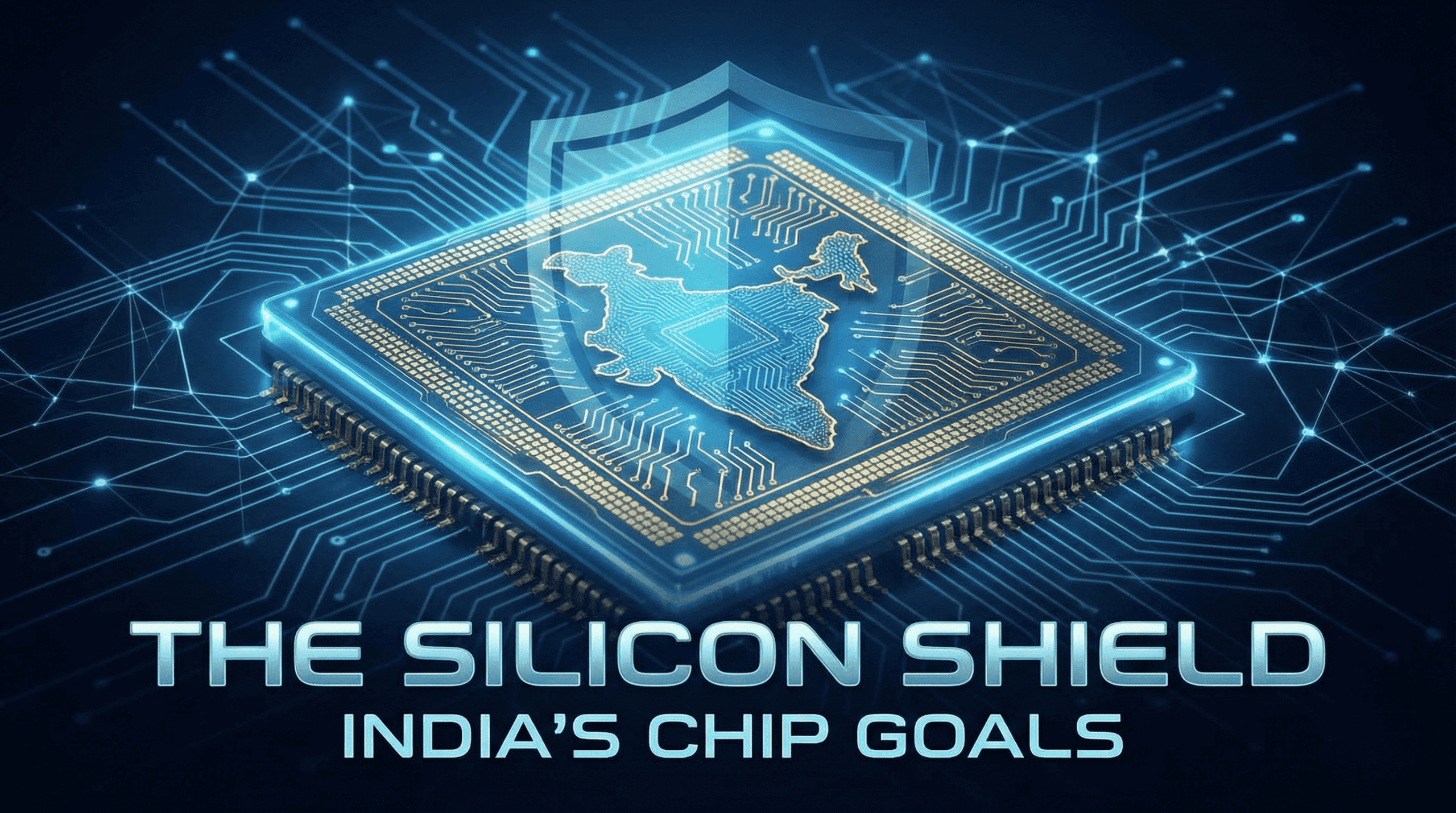
The Silicon Shield: Semiconductor Geopolitics and India’s Chip Goals
Semiconductors are now as important as oil was in the last century; countries will do a lot to get their hands on them. These small silicon chips are what run everything from smartphones to military planes, and having control over how they’re made has turned into a key area of conflict in the new U. S.-China rivalry. India, which is the fifth-largest economy in the world, is at an important point: Can it become a real competitor in the global semiconductor industry, or will it continue to rely on other countries for this vital technology that affects both economic strength and independence?
The Concentration Crisis
The semiconductor industry is known for having one of the most concentrated supply chains ever. Taiwan’s TSMC produces more than 90% of the world’s cutting-edge chips. South Korea’s Samsung and SK Hynix lead in memory chip production. The Netherlands’ ASML is the only company that makes the extreme ultraviolet lithography machines needed for high-tech manufacturing. This concentration creates weaknesses that were painfully clear during COVID-19 when chip shortages caused big problems for various industries, including cars and consumer electronics.
The U. S. has made it a top goal to limit China’s semiconductor abilities, putting strict export rules in place in October 2022 that stop American firms from selling advanced chips or chip-making tools to China. In response, China has invested hundreds of billions of dollars to become self-reliant. This has led to a divided global chip market that greatly affects every country involved.
India’s Paradox
India’s connection to semiconductors is full of contradictions. The country has over 20,000 chip design engineers and is the second-largest design center in the world. Indian engineers lead teams at big companies like Intel, Nvidia, AMD, and Qualcomm. Despite this, India imports almost all of its semiconductor needs, spending more than 24 billion dollars every year.
Previous efforts to create local manufacturing—from Semiconductor Complex Limited in the 1980s to newer deals with foreign partners—have not succeeded due to not enough government support or too many bureaucratic obstacles.
The New Push
The Modi administration started the $10 billion India Semiconductor Mission in December 2021, showing a new sense of purpose. Recent news is encouraging: Tata Electronics teamed up with Taiwan’s Powerchip to create India’s first big semiconductor factory in Gujarat, Micron announced a 2.75 billion dollar assembly plant, and several chip design companies are expanding their work. These investments, which total over 15 billion dollars, mark the most significant progress seen in decades.
However, tough truths still exist. To build semiconductor factories, you need more than just money; you also need complicated systems like dependable power, super clean water, special chemicals, and skilled workers. India is aiming to create older technology chips (28nm and larger) instead of the newest ones that are smaller than 7nm, which means it will still rely on imports for the most advanced chips that are important for AI and powerful computing.
There is also a lot of extra capacity in older chips, largely because of investments from China, which might hurt India’s chip factories’ profits.
Strategic Positioning
Instead of trying to compete with Taiwan in making top-notch chips, India should concentrate on areas where it can truly excel. Automotive and industrial chips fit well with India’s expanding electric vehicle industry. Designing and testing chips can use the current software skills without needing a lot of investment. New packaging methods like 3D chip stacking can add a lot of value with less money involved.
New types of semiconductors for power electronics and 5G technology are growing markets. Most importantly, India can offer reliable chip-making services for Western defense and important infrastructure, thanks to its democratic system and strong protection of intellectual property.
The Geopolitical Opening
India’s goals match up well with what Western countries want to do to make supply chains safer. The U. S. CHIPS Act and plans in Europe specifically promote working with friendly countries. The U. S.-India Initiative on Critical and Emerging Technologies sees semiconductors as a key area.
American companies see India as a way to reduce reliance on Taiwan and balance out the influence of China. For India, working together with the U. S., Japan, South Korea, and the EU means gaining access to technology and funding that would take many years to develop alone.
What India Must Do to Succeed
For India to succeed, it needs to take a different approach. It’s important to have consistent long-term policies, as semiconductor projects need 15-20 years to see results. There must be a strong focus on training skilled workers and stopping the loss of talent.
The infrastructure should meet worldwide standards with reliable power, water, and quick approvals. Government purchases can help create strong demand. Most importantly, India must develop the whole ecosystem—from producing silicon wafers to managing waste—rather than just bringing in factories.
Conclusion
Semiconductors are more than just a chance for economic growth; they are crucial for independence in a world that is becoming more competitive. Right now is a unique time for India when it can receive advanced technology from the West like never before.
The rewards—economic growth, leading in technology, and true independence—could be game-changing. But turning these dreams into reality takes action. India has the skills, the market, and the chance. The big question is whether it can provide the needed infrastructure, maintain steady policies, and have the political determination.
The world is watching to see if India can finally transform its potential into real achievements.