

Budget 2026: What It Means for the Middle Class, Farmers, and Women
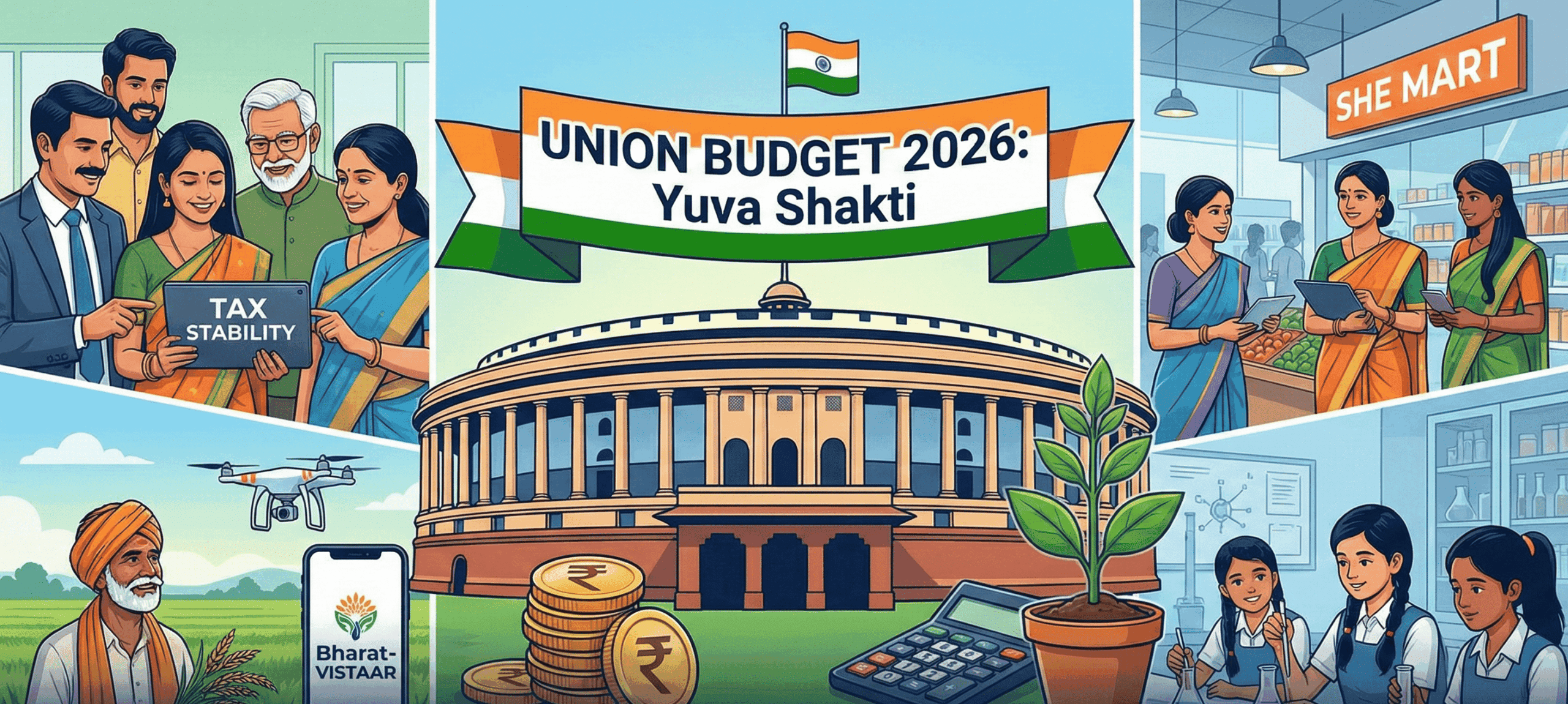
Finance Minister Nirmala Sitharaman shared her ninth Union Budget on February 1, 2026, calling it a “Yuva Shakti-driven Budget” aimed at turning dreams into realities. This Budget paid a lot of attention to manufacturing, infrastructure, and growing the economy in the long run, but three important groups—the middle class, farmers, and women—were eager to see the direct benefits for them. Here’s what Budget 2026 provided for these groups.
Middle Class: Stability Instead of Relief
For the salaried middle class in India, Budget 2026 brought some letdowns along with what was expected. This year, the Budget did not change the income tax rates like last year, which had raised the tax-free income limit to ₹12 lakh under the new rules. Instead, it kept the same tax rates for the financial year 2026-27. The tax system is still the same: no tax on earnings up to ₹4 lakh, then different tax rates of 5%, 10%, 15%, 20%, 25%, and 30% for income over ₹24 lakh.
However, the Budget did have some good points. The government rolled out a few tax reductions that can help indirectly. The fee on foreign education, medical care abroad, and travel packages has dropped from 5% to 2%, giving families more money to work with. For example, if someone wanted to send ₹20 lakh for studying overseas, they’d now pay ₹40,000 instead of ₹1 lakh as tax, saving ₹60,000.
The time to file updated tax returns has been extended from December 31 to March 31, making it easier for taxpayers to fix mistakes. Plus, non-resident Indians selling property in India will find it easier with simpler tax procedures, as they won’t have to register for a separate Tax Identification Number.
The new Income Tax Act 2025, which will start from April 1, 2026, aims to make things easier with new tax return forms. Still, as one expert pointed out, this Budget is more of a careful adjustment than a big change, offering stability instead of major tax cuts.
Farmers: Focus on Technology and New Options
Budget 2026 set aside ₹1.63 lakh crore for agriculture, which is a 7% increase from last year. However, the government is changing its strategy, moving away from traditional cereal farming and focusing more on other sectors and high-value crops.
The big news for farmers is Bharat-VISTAAR (Virtually Integrated System to Access Agricultural Resources). This is a multilingual platform powered by AI that combines AgriStack portals and agricultural practices from ICAR in the India Budget. It will offer personalized advice to farmers about planning their crops, weather forecasts, pest management, and market prices in their local languages, helping them make smart decisions on time.
To encourage a variety of crops, the government will back high-value plants like coconut, sandalwood, cocoa, and cashew in coastal areas according to the India Budget. There is a new Coconut Promotion Scheme that aims to boost production and productivity, which will help 30 million people, including 10 million farmers, by replacing old trees that don’t produce well with new varieties.
For allied sectors, the government will start projects to develop 500 reservoirs and Amrit Sarovars to improve fisheries in the India Budget. There will be a focus on involving startups and groups led by women in coastal supply chains. The animal husbandry sector will get extra attention with subsidy programs tied to credit that help create quality jobs in rural and nearby urban areas.
Meanwhile, PM-KISAN will keep its current budget of ₹63,500 crore, without an increase in the ₹6,000 yearly cash benefit. The Budget has kept the food subsidy at ₹2.3 lakh crore for 81.3 crore beneficiaries, but funding for crop insurance and irrigation has decreased in real terms when considering inflation, which is a worry for traditional farming communities.
Women: From Credit to Enterprise Ownership
Empowering women economically has become an important focus in Budget 2026. The Finance Minister announced plans to help women move “from credit-based jobs to owning businesses” according to the India Budget, building on the success of the Lakhpati Didi Programme.
The main announcement is setting up Self-Help Entrepreneur (SHE) Marts, which will be community-owned stores within cluster-level federations in the India Budget. These marts will get support through improved and creative financing, allowing rural women to grow and become full business owners instead of just being recipients of welfare.
There was also a lot of emphasis on improving education infrastructure. To help girl students in STEM fields, the government plans to build a girls’ hostel in every district across the country in the India Budget. This effort aims to tackle the issues with long study hours and lab work that often discourage women from continuing in advanced scientific studies.
The Ministry of Women and Child Development’s budget increased to ₹28,183.06 crore, with important programs like Saksham Anganwadi and POSHAN 2.0 getting ₹23,100 crore. The government also set aside ₹200 crore for the Nirbhaya Fund, focusing on the safety of women as a key priority.
Moreover, groups led by women will help improve the fisheries industry in coastal regions, creating connections to markets with the support of Fish Farmers Producer Organizations in the India Budget, which will open up new job opportunities in the blue economy.
The Bigger Picture
The Budget 2026 shows how the government is trying to balance long-term changes with short-term money issues. While the middle class got more stability instead of direct help, farmers are being encouraged to modernize and explore new opportunities, and women are getting chances to own businesses. The financial shortfall for FY27 is expected to be 4.3% of GDP, with public spending on infrastructure increased to ₹12.2 lakh crore, which shows the government’s focus on growth through building projects.
Whether these plans will actually help people will rely on how well they are put into action at the local level. For now, Budget 2026 lays out a plan that focuses on technology, starting new businesses, and managing money wisely rather than just giving out quick rewards.